Earlier this week, Michele Shaw posted an excellent article about beta readers on her blog. If you haven’t read it, please check it out.
Beta readers are given the task of examining an author’s work in process and offering constructive advice concerning plot, prose, structure, and virtually every aspect of a manuscript. They do this for no pay, few accolades, and often little more than the satisfaction that they kept an author from looking like a total moron.
Good beta readers are like the ground crew that checks out a commercial jet before it takes off. The passengers usually don’t even see them, but, the fact that the plane is able to take off and land without losing a wing or running out of gas means that they did their job.
In case you are wondering, readers equate to passengers in that analogy.
What?
No, you can’t be the pilot.
This is my blog, so I am the pilot, dammit. Get your own jet.
Sorry. I was rambling. I’m a rambler.
I have had the good fortune of interacting with several fantastic beta readers. Here is my list of traits they all share:
1. Brutal honesty.
This is why it is difficult for friends to beta read. If a passage makes you want to set fire to the manuscript and bury the remains in a haunted pet cemetery so the thing can rise as an evil doppelganger thus giving you the chance to kill it again, then the author needs to know that. It can be sugar coated or dipped in vinegar, but that is information they need.
2. Fresh ideas.
Sometimes an interesting idea makes it into a manuscript but is never fully explored. A good beta reader can pick up on an orphan idea and give the author a nudge to feed and water it until it grows into big plot lizard that eats the weak story threads and poops out 24 karat gold rubix cubes! It’s a fact.
3. Ability to see both the big picture and the details.
Picking out an author’s tendency to overuse the phrase “he smirked” is an example of good detail observation. Pointing out that a character is always smiling and giddy despite the majority of a story involving them being in a state of utter despair is a great big picture observation. A beta reader who can point out both of those things is worth his or her height in Guinness.
Yes, height.
4. Understanding of the genre and writing style of a given work.
A reader who enjoys historical fiction probably shouldn’t beta read a futuristic sci-fi tale. A fan of gothic horror might like a romance book, but the odds of that are not great. A good beta reader knows what they like and can offer great advice for someone writing a book in a genre they enjoy.
Think you have what it takes to be a beta reader, lil' buckaroo? Prove it.
I am looking for several beta readers to test drive a horror/urban fantasy short story I am working on for an upcoming anthology. If you are into vampires and werewolves who act like monsters instead of lovesick emo adolescents and you want the chance to help make a soon to be published story as good as it can be, send me a message.
authormikemurphy@gmail.com
Keep in mind, I am my own biggest fan so I already know how awesome I am. If my head were any bigger, it would require a signal light for passing planes. I need someone who is not afraid to tell me what sucks about the story so I can make it better.
I also need some Cheezits, because Cheezits are fantastic, but you let me worry about those.
Now that my pitch is out of the way, are there any beta readers out there who want to share their thoughts and experiences in beta reading?
How about authors, have you had any shockingly good or horrifyingly bad beta readers?
Also, do Schnauzers make good beta readers? If so, I know a guy.
Showing posts with label writing. Show all posts
Showing posts with label writing. Show all posts
Tuesday, November 30, 2010


Thursday, July 29, 2010
Werewolf Week + read my interview at Dun Scaith
Chris Kelly, the mastermind behind independent U.K. publisher Scathach, has declared the week of August 1st through August 7th to be Werewolf Week! Who am I to argue?
Head over to his blog, Dun Scaith, for werewolf goodness. You will also find an interview with your favorite not famous yet but slightly interesting author of werewolfery. Care to guess who it is?
No, not her.
Or him.
Her either.
What? That guy doesn't even write!
I'm talking about me, chowderhead.
Just go read the fucking interview already. :)
Head over to his blog, Dun Scaith, for werewolf goodness. You will also find an interview with your favorite not famous yet but slightly interesting author of werewolfery. Care to guess who it is?
No, not her.
Or him.
Her either.
What? That guy doesn't even write!
I'm talking about me, chowderhead.
Just go read the fucking interview already. :)
Monday, May 17, 2010
Lucifera's Pet: The Motion Picture!!!
Ok. The title is a little misleading. Has my novel been opted for a major motion picture? No. Not yet. That doesn’t mean I can’t go ahead and get everything planned out for when Hollywood eventually comes knocking on my door.
This morning, I asked a couple of fellow writers the following question for an upcoming interview:
Assume you have just won the equivalent of the literary lottery and a major film studio wants to turn your work into a big-budget motion picture. Which of your stories would you like to see as a film, and who would you want to be involved (actors, director, etc.)? Also, CGI or no CGI?
I decided I wanted to be the first to answer my own question.
Without further ado, here are the cast and main players in the film adaptation of Lucifera’s Pet:
Director:
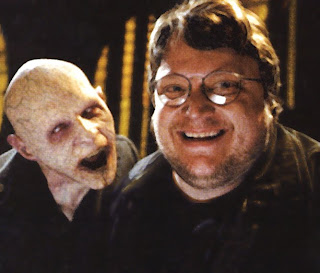
Guillermo Del Toro
He has proven that he can do amazing things within a budget. He also can stay faithful to source material and bring even the most absurd characters to life in such a way that you forget about the prosthetics and just see the character. He can also pepper horror with a healthy dose of comedy. GDT is my guy.
Cast:
The Werewolf

Robert Downey Jr.
The lead player has to be able to chew up entire chunks of every scene in which he appears. He also has to be simultaneously psychotic and sympathetic. Who better than “the dude playing the dude disguised as another dude?”
Emil Vladu – Master Vampire

Cary Elwes
Let’s turn back the clock and have Dread Pirate Roberts from The Princess Bride, circa 1987 play the villain. He already has the air of condescension down to a science.
Robert Marrick – Emil’s henchman

Steve Buscemi
Marrick is creepy and he talks with an exaggerated lisp that makes him sound like a snake. I can think of no one better to play him than my favorite creepy actor.
Nash – Lucifera’s consigliore
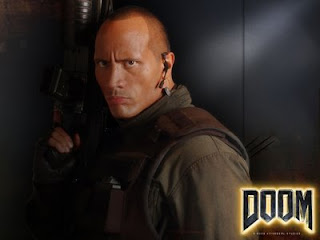
Dwayne “The Rock” Johnson
Nash is big, brooding, and never speaks a word. He probably has a little too much charisma for the part, but The Rock will have no trouble filling the role physically.
Christopher Johnson – Newly turned vampire
Justin Long

The awkward, brainy kid from Dodgeball: A True Underdog Story, will be perfect as the awkward, brainy vampire.
William O’Connell – werewolf

Daniel Day Lewis
O’Connell is big and boisterous with a mustache as big as all outdoors. He also has two knives: one in his hand and one in your back. Daniel Day Lewis is a lock for the role.
Now for the tough part: casting the title character.
Lucifera Romana – Master Vampire of Los Angeles

Shelly Martinez
Whenever I write Lucifera, Shelly in her former role as “Ariel” is how I picture the character. Would she win an Academy Award? Don't know. Don't care. If I were interested in Academy Awards, I’d rewrite the story about an innocent man on death row that Hollywood usually loves to shower with golden statues.
Supporting cast: Sean Connery as Tarquin. Catherine Zeta Jones as Lucrecia. Sir Anthony Hopkins as Cornelius. David Tennant as James. Valerie Bertinelli as Mary. Christian Slater as “The Mugger.”
Special Effects:

The team from Hellboy and Hellboy 2.
In both films, they bring monsters to life that I never believed would work on the big screen. These guys blend makeup, animatronics, and computer graphics in such a way that you forget you are watching something impossible. I would love to see what they could do with a pack of seven-foot-tall werewolves.
There you have it. That’s my film.
Now for the fun part. Tell me about your movie. You can post your thoughts here or we can make it really fun: Add pictures and put it in your blog, then post the link here. Either way, I want to hear about what your vision will look like on the big screen.
This morning, I asked a couple of fellow writers the following question for an upcoming interview:
Assume you have just won the equivalent of the literary lottery and a major film studio wants to turn your work into a big-budget motion picture. Which of your stories would you like to see as a film, and who would you want to be involved (actors, director, etc.)? Also, CGI or no CGI?
I decided I wanted to be the first to answer my own question.
Without further ado, here are the cast and main players in the film adaptation of Lucifera’s Pet:
Director:

Guillermo Del Toro
He has proven that he can do amazing things within a budget. He also can stay faithful to source material and bring even the most absurd characters to life in such a way that you forget about the prosthetics and just see the character. He can also pepper horror with a healthy dose of comedy. GDT is my guy.
Cast:
The Werewolf

Robert Downey Jr.
The lead player has to be able to chew up entire chunks of every scene in which he appears. He also has to be simultaneously psychotic and sympathetic. Who better than “the dude playing the dude disguised as another dude?”
Emil Vladu – Master Vampire

Cary Elwes
Let’s turn back the clock and have Dread Pirate Roberts from The Princess Bride, circa 1987 play the villain. He already has the air of condescension down to a science.
Robert Marrick – Emil’s henchman

Steve Buscemi
Marrick is creepy and he talks with an exaggerated lisp that makes him sound like a snake. I can think of no one better to play him than my favorite creepy actor.
Nash – Lucifera’s consigliore

Dwayne “The Rock” Johnson
Nash is big, brooding, and never speaks a word. He probably has a little too much charisma for the part, but The Rock will have no trouble filling the role physically.
Christopher Johnson – Newly turned vampire
Justin Long

The awkward, brainy kid from Dodgeball: A True Underdog Story, will be perfect as the awkward, brainy vampire.
William O’Connell – werewolf

Daniel Day Lewis
O’Connell is big and boisterous with a mustache as big as all outdoors. He also has two knives: one in his hand and one in your back. Daniel Day Lewis is a lock for the role.
Now for the tough part: casting the title character.
Lucifera Romana – Master Vampire of Los Angeles

Shelly Martinez
Whenever I write Lucifera, Shelly in her former role as “Ariel” is how I picture the character. Would she win an Academy Award? Don't know. Don't care. If I were interested in Academy Awards, I’d rewrite the story about an innocent man on death row that Hollywood usually loves to shower with golden statues.
Supporting cast: Sean Connery as Tarquin. Catherine Zeta Jones as Lucrecia. Sir Anthony Hopkins as Cornelius. David Tennant as James. Valerie Bertinelli as Mary. Christian Slater as “The Mugger.”
Special Effects:

The team from Hellboy and Hellboy 2.
In both films, they bring monsters to life that I never believed would work on the big screen. These guys blend makeup, animatronics, and computer graphics in such a way that you forget you are watching something impossible. I would love to see what they could do with a pack of seven-foot-tall werewolves.
There you have it. That’s my film.
Now for the fun part. Tell me about your movie. You can post your thoughts here or we can make it really fun: Add pictures and put it in your blog, then post the link here. Either way, I want to hear about what your vision will look like on the big screen.
M.T. Murphy is the author of Lucifera’s Pet, a violent and sexy dark fiction tale of werewolves and vampires. Connect with him below:
Website: http://www.luciferaspet.com
Twitter: http://twitter.com/WerewolfMike
MySpace: http://www.myspace.com/luciferaspet
Smashwords (Free eBooks): http://www.smashwords.com/profile/view/mtmurphy
Monday, May 10, 2010
Playing in the graveyard
I began writing this as a reply to one of Ziggy Kinsella’s blogs over at The Feckless Goblin. I liked the subject so much that I decided to develop the reply into a blog article of my own as well. Be sure to check out Ziggy’s original post here.
My family has owned a cemetery since the 1800s. As a child, I used to play with my cousins amongst the head stones and dirt mounds over fresh graves. It never occurred to me to be frightened of the cemetery's occupants six feet below.
In elementary school I was one of the weird kids. Being a bit of an outsider, I was never frightened by the classic monsters. I pitied Frankenstein’s monster and thought the Wolfman got a bad rap. And Dracula? Well, Dracula was just plain cool.
When I was eleven years old, a movie about Jack the Ripper came on television one Sunday night. The hook was that this movie would reveal the “true” identity of the killer. I had to beg mom and dad to let me stay up past my bed time to watch the ending. I immediately regretted doing so. In the last scene that I remember, the authorities dragged away a royal physician as he ranted about “killing whores” and slashed at the air with his empty scalpel hand. For some reason, that image was even more disturbing to me than the recreations of the killings themselves.
Later that night I was just settling down to sleep when I caught a glimpse of my open closet. There in the darkness stood Jack the Ripper, brandishing his scalpel and waiting for me to fall asleep. I leapt out of bed and closed the door. I returned to bed and pulled the covers tightly over my head. Five minutes later, the handle clicked and the door glided open with a slow, agonizing squeak.
I knew Jack the Ripper wasn’t really in my closet. I knew my closet doorknob didn’t work well and was prone to popping open. I also knew that the door had squeaked like that for years. That didn’t make it any less terrifying.
What scared me the most about the Jack the Ripper scenario was the fact that there was no discernable motive. It was unexplainable brutality and, no matter what the movie said, they never found out who the killer really was. With most monsters, books, or other scenarios there is some sense of order. The villain is eventually revealed and has some grand scheme in mind. It may be horrible and barbaric, but there is a reason behind his or her heinous actions.
The Ripper killings show that human beings sometimes do despicable things for no reason at all. For my painfully logical mind, that is far more frightening than playing in the graveyard.
Connect with me below:
Website: http://www.luciferaspet.com
Blog: http://werewolfkibble.blogspot.com/
Twitter: http://twitter.com/WerewolfMike
MySpace: http://www.myspace.com/luciferaspet
Smashwords (Free eBooks): http://www.smashwords.com/profile/view/mtmurphy
My family has owned a cemetery since the 1800s. As a child, I used to play with my cousins amongst the head stones and dirt mounds over fresh graves. It never occurred to me to be frightened of the cemetery's occupants six feet below.
In elementary school I was one of the weird kids. Being a bit of an outsider, I was never frightened by the classic monsters. I pitied Frankenstein’s monster and thought the Wolfman got a bad rap. And Dracula? Well, Dracula was just plain cool.
When I was eleven years old, a movie about Jack the Ripper came on television one Sunday night. The hook was that this movie would reveal the “true” identity of the killer. I had to beg mom and dad to let me stay up past my bed time to watch the ending. I immediately regretted doing so. In the last scene that I remember, the authorities dragged away a royal physician as he ranted about “killing whores” and slashed at the air with his empty scalpel hand. For some reason, that image was even more disturbing to me than the recreations of the killings themselves.
Later that night I was just settling down to sleep when I caught a glimpse of my open closet. There in the darkness stood Jack the Ripper, brandishing his scalpel and waiting for me to fall asleep. I leapt out of bed and closed the door. I returned to bed and pulled the covers tightly over my head. Five minutes later, the handle clicked and the door glided open with a slow, agonizing squeak.
I knew Jack the Ripper wasn’t really in my closet. I knew my closet doorknob didn’t work well and was prone to popping open. I also knew that the door had squeaked like that for years. That didn’t make it any less terrifying.
What scared me the most about the Jack the Ripper scenario was the fact that there was no discernable motive. It was unexplainable brutality and, no matter what the movie said, they never found out who the killer really was. With most monsters, books, or other scenarios there is some sense of order. The villain is eventually revealed and has some grand scheme in mind. It may be horrible and barbaric, but there is a reason behind his or her heinous actions.
The Ripper killings show that human beings sometimes do despicable things for no reason at all. For my painfully logical mind, that is far more frightening than playing in the graveyard.
Connect with me below:
Website: http://www.luciferaspet.com
Blog: http://werewolfkibble.blogspot.com/
Twitter: http://twitter.com/WerewolfMike
MySpace: http://www.myspace.com/luciferaspet
Smashwords (Free eBooks): http://www.smashwords.com/profile/view/mtmurphy
Friday, May 7, 2010
Judging a book by its cover
I grew up reading comic books. I bet I just lost a lot of you right there. Believe it or not, comics can teach us a lot about how people decide whether or not to look at a book. In no other area is a cover image more important than for monthly periodicals.
I spent several years in magazine circulation and learned that readers flock to a pretty cover. One of the magazines I worked with was a food publication. They could have an issue with the best recipes and articles about food written by world renowned chefs and critics, but if they were stuck with a cover image of a wilted bologna sandwich, they wouldn’t sell an issue.
When I was small, my dad would come home from his job chasing bad guys as a State Trooper every Friday and bring me a comic book. We would sit together and read a story about (what else?) chasing bad guys. He didn’t pay attention to covers. He just grabbed whatever comic was on top of the rack at the convenience store on the way home. I grew up with a love of reading and a love of comics.
I drifted out of comics for several years after dad retired and no longer made it by the convenience store each Friday. One day after school, a comic caught my eye: Incredible Hulk #340. The character Wolverine had his claws drawn and a snarl on his face while a reflection of the Hulk’s face showed that the anger was mutual.

I opened the book and found exactly what I hoped to find: those two characters engaging in a brutal battle.
When I browse novels, nothing thrills me more than an exciting, artistic cover. I have been burned enough times to learn never to buy a book based solely on the cover, but that is what draws me to a book. The cover should be a window inside that gives potential readers a taste of things to come.
Blue Moon by Laurell K. Hamilton, is one of my favorite books. It is also the last book in the Anita Blake series that I have been able to finish. Here is the cover art on the version that I originally purchased:

The image is dark and foreboding. There is no question that this is a werewolf tale. I had read one previous book in the series before this one. I bought Blue Moon on the spot and read the other stories leading up to that one shortly thereafter. And then it stopped.

I let a friend borrow my copy of Blue Moon and it was never seen again. I wanted to reread it a few years back and decided to pick up another copy. To my dismay, the image above was now indicative of what that series became. If I were to evaluate Blue Moon based on this image, I would guess that it is a book about a wolf that has sex with a giant smurf. This would be an inaccurate assessment. From what I understand, that does not take place until much later in the series.
One of my favorite books in high school was Surfing Samurai Robots by Mel Gilden. The book can be judged by its cover with 100% accuracy:

When I wrote Lucifera’s Pet, I knew exactly what type of cover I wanted it to have. Alissa Rindels was able to bring the lead characters to life in a painting that became the cover image below. You can take one look and know exactly what to expect.

Will good cover art and design alone sell books? Maybe a few. As a reader, I look for a cover that conveys a true sense of the story contained within a book’s pages. As a writer, I want potential readers to know what they have in store.
I spent several years in magazine circulation and learned that readers flock to a pretty cover. One of the magazines I worked with was a food publication. They could have an issue with the best recipes and articles about food written by world renowned chefs and critics, but if they were stuck with a cover image of a wilted bologna sandwich, they wouldn’t sell an issue.
When I was small, my dad would come home from his job chasing bad guys as a State Trooper every Friday and bring me a comic book. We would sit together and read a story about (what else?) chasing bad guys. He didn’t pay attention to covers. He just grabbed whatever comic was on top of the rack at the convenience store on the way home. I grew up with a love of reading and a love of comics.
I drifted out of comics for several years after dad retired and no longer made it by the convenience store each Friday. One day after school, a comic caught my eye: Incredible Hulk #340. The character Wolverine had his claws drawn and a snarl on his face while a reflection of the Hulk’s face showed that the anger was mutual.

I opened the book and found exactly what I hoped to find: those two characters engaging in a brutal battle.
When I browse novels, nothing thrills me more than an exciting, artistic cover. I have been burned enough times to learn never to buy a book based solely on the cover, but that is what draws me to a book. The cover should be a window inside that gives potential readers a taste of things to come.
Blue Moon by Laurell K. Hamilton, is one of my favorite books. It is also the last book in the Anita Blake series that I have been able to finish. Here is the cover art on the version that I originally purchased:

The image is dark and foreboding. There is no question that this is a werewolf tale. I had read one previous book in the series before this one. I bought Blue Moon on the spot and read the other stories leading up to that one shortly thereafter. And then it stopped.

I let a friend borrow my copy of Blue Moon and it was never seen again. I wanted to reread it a few years back and decided to pick up another copy. To my dismay, the image above was now indicative of what that series became. If I were to evaluate Blue Moon based on this image, I would guess that it is a book about a wolf that has sex with a giant smurf. This would be an inaccurate assessment. From what I understand, that does not take place until much later in the series.
One of my favorite books in high school was Surfing Samurai Robots by Mel Gilden. The book can be judged by its cover with 100% accuracy:

When I wrote Lucifera’s Pet, I knew exactly what type of cover I wanted it to have. Alissa Rindels was able to bring the lead characters to life in a painting that became the cover image below. You can take one look and know exactly what to expect.

Will good cover art and design alone sell books? Maybe a few. As a reader, I look for a cover that conveys a true sense of the story contained within a book’s pages. As a writer, I want potential readers to know what they have in store.
Monday, April 19, 2010
Four Steps to Writing a Novel
First, let’s clarify something. The title of this blog is “Four Steps to Writing a Novel,” not “Anybody Can Write A Bestselling Novel,” or even “Anybody Can Write A Good Novel.” Millions of people start novels every day. Very few actually finish. Even fewer manage to get their masterpiece in front of readers. In this blog, I will lay out a strategy that you can use to write a novel. The quality is up to you.
1. Build your characters
Novels are driven by characters. The best plot in the world is useless if the characters involved are not engaging. You need a protagonist or protagonists whose exploits will captivate the reader from the first page to the last page. An equally strong antagonist is just as important.
Once you have created your central characters , you need to bring them to life. Where did they grow up? What are their goals? How do they speak? How will they react when a giant spider bites the head off of the person next to them on the park bench? Your characters will experience a thousand situations in your story. Understanding who they are and what they want will help you keep their actions believable throughout their journey.
2. Plot out your story
You have defined characters with distinct traits that will guide their behavior. Now you need to decide what will happen to your characters. There are many ways you can do this. Some writers begin with a situation and let their writing flow and decide the story as they go.
I envy those writers. I am not one of them.
Every story has a beginning, a middle, and an end.
Beginning: A giant spider captures Joe’s girlfriend, wrapping her up in a web and dragging her back to its lair for lunch.
Middle: Joe fights his way through the spider-infested city to save her.
End: Joe gets to the nest and saves her, but finds that the spiders filled her with spider eggs. They are both eaten by a million tiny mutant spiderbabies. The end.
HA! Fun stuff.
For me, an outline is critical. I don’t have a lot of free time to write, so I must make each minute count. By putting the main points down in an outline, I am able to keep myself focused and give direction to my words. I expand on the beginning, middle, and end points, adding plot points in between. These elements become like small “finish lines” in the story. This allows me to write to the next plot point and stay focused on that particular scene.
The outline is a tool. It will help you write towards your goal, but it is not set in stone. You can and will change the outline many times over the course of a novel. Some writers fear outlines because they do not want to be constrained. If used properly, an outline will give you something that anyone who writes a novel must have:
3. Stay motivated
Writing a novel takes time. If you are not a full-time writer, it will take you months or years to finish. You must find a way to stay motivated.
FYI – Money and fame cannot be your motivating factors. For every Stephen King who lives, breathes, and bleeds the writing craft, there are fifty thousand M.T. Murphy’s trying to find an audience.
Find someone who will read your work. It can be your significant other, a friend, your old college English professor—anyone who will read your story and give you feedback. Writing a blog and allowing online readers to get a first look at your work in process is also an option that is gaining popularity. No matter who reads your story, just having an audience will make you want to keep going. If they are enjoying your words and letting you know that, you will be even more excited to finish what you started.
The only way to finish a novel is by writing. Whether you write ten words a day or two thousand, you are far more likely to keep going if you have goals. If you write three hundred words a day for five days each week, you will have written 78,000 words at the end of a year. That is the equivalent of one page of text each writing day. That is also the approximate word count of a 260 page novel.
4. Finished Product!
If you are able to fight your way through all the way to the end, congratulations! You have written your novel. At this point, you will want to step back and let it sit for a while. After you have given it a week or so to cool, read it yourself. You will likely see a thousand things you want to change. You can fix these as you go or read it until the end and then fix them. Either way, you will repeat this process several times, improving your story each time.
Once your novel reads exactly the way you want it to, you are finished. At this point, you have many options. You can file it away on your computer or send it to friends and family. You can self-publish it immediately as an eBook on the web. You can find a good editor who will review and suggest ways to improve it.
I suggest taking your finished draft to an editor who is experienced with similar books. Whether you publish the book yourself, shop around for a literary agent, or submit the book directly to publishers, every book needs editing. A professional editor can both point out your mistakes and help you make your story as strong as it can be.
Advice from a nobody!
The most important piece of advice I can give you is this: Make a commitment to yourself that you will finish your novel and write it down along with a deadline. Put the piece of paper where you will see it every day. When you give yourself a goal, your subconscious mind has a way of steering your waking actions to achieve that goal.
If you want to write a novel, you can. The only thing stopping you is you.
I may be a “nobody” right now, but I have finished writing a novel, and so can you.
In a future blog I will reveal the secrets for writing a bestselling novel that starts a movie franchise and makes the author rich beyond his or her wildest dreams—just as soon as I figure that out for myself.
1. Build your characters
Novels are driven by characters. The best plot in the world is useless if the characters involved are not engaging. You need a protagonist or protagonists whose exploits will captivate the reader from the first page to the last page. An equally strong antagonist is just as important.
Once you have created your central characters , you need to bring them to life. Where did they grow up? What are their goals? How do they speak? How will they react when a giant spider bites the head off of the person next to them on the park bench? Your characters will experience a thousand situations in your story. Understanding who they are and what they want will help you keep their actions believable throughout their journey.
2. Plot out your story
You have defined characters with distinct traits that will guide their behavior. Now you need to decide what will happen to your characters. There are many ways you can do this. Some writers begin with a situation and let their writing flow and decide the story as they go.
I envy those writers. I am not one of them.
Every story has a beginning, a middle, and an end.
Beginning: A giant spider captures Joe’s girlfriend, wrapping her up in a web and dragging her back to its lair for lunch.
Middle: Joe fights his way through the spider-infested city to save her.
End: Joe gets to the nest and saves her, but finds that the spiders filled her with spider eggs. They are both eaten by a million tiny mutant spiderbabies. The end.
HA! Fun stuff.
For me, an outline is critical. I don’t have a lot of free time to write, so I must make each minute count. By putting the main points down in an outline, I am able to keep myself focused and give direction to my words. I expand on the beginning, middle, and end points, adding plot points in between. These elements become like small “finish lines” in the story. This allows me to write to the next plot point and stay focused on that particular scene.
The outline is a tool. It will help you write towards your goal, but it is not set in stone. You can and will change the outline many times over the course of a novel. Some writers fear outlines because they do not want to be constrained. If used properly, an outline will give you something that anyone who writes a novel must have:
3. Stay motivated
Writing a novel takes time. If you are not a full-time writer, it will take you months or years to finish. You must find a way to stay motivated.
FYI – Money and fame cannot be your motivating factors. For every Stephen King who lives, breathes, and bleeds the writing craft, there are fifty thousand M.T. Murphy’s trying to find an audience.
Find someone who will read your work. It can be your significant other, a friend, your old college English professor—anyone who will read your story and give you feedback. Writing a blog and allowing online readers to get a first look at your work in process is also an option that is gaining popularity. No matter who reads your story, just having an audience will make you want to keep going. If they are enjoying your words and letting you know that, you will be even more excited to finish what you started.
The only way to finish a novel is by writing. Whether you write ten words a day or two thousand, you are far more likely to keep going if you have goals. If you write three hundred words a day for five days each week, you will have written 78,000 words at the end of a year. That is the equivalent of one page of text each writing day. That is also the approximate word count of a 260 page novel.
4. Finished Product!
If you are able to fight your way through all the way to the end, congratulations! You have written your novel. At this point, you will want to step back and let it sit for a while. After you have given it a week or so to cool, read it yourself. You will likely see a thousand things you want to change. You can fix these as you go or read it until the end and then fix them. Either way, you will repeat this process several times, improving your story each time.
Once your novel reads exactly the way you want it to, you are finished. At this point, you have many options. You can file it away on your computer or send it to friends and family. You can self-publish it immediately as an eBook on the web. You can find a good editor who will review and suggest ways to improve it.
I suggest taking your finished draft to an editor who is experienced with similar books. Whether you publish the book yourself, shop around for a literary agent, or submit the book directly to publishers, every book needs editing. A professional editor can both point out your mistakes and help you make your story as strong as it can be.
Advice from a nobody!
The most important piece of advice I can give you is this: Make a commitment to yourself that you will finish your novel and write it down along with a deadline. Put the piece of paper where you will see it every day. When you give yourself a goal, your subconscious mind has a way of steering your waking actions to achieve that goal.
If you want to write a novel, you can. The only thing stopping you is you.
I may be a “nobody” right now, but I have finished writing a novel, and so can you.
In a future blog I will reveal the secrets for writing a bestselling novel that starts a movie franchise and makes the author rich beyond his or her wildest dreams—just as soon as I figure that out for myself.
Monday, November 23, 2009
Favorite werewolf movies
Let’s face it, when it comes to movies, werewolves have always taken a back seat to their monstrous cousins. There are countless vampire films and a ton of zombie flicks. Wikipedia lists sixty-one films that use the Dracula character, alone.
When I find a good film about my favorite brand of things that go bump in the night, I want to be sure that people know about it. So, in no particular order, here are my favorite werewolf movies that you should run out and buy/rent/put in your Netflix que/borrow/steal and watch immediately.
Teen Wolf (1985) –Becoming a werewolf causes Michael J. Fox to go from loser to captain of the basketball team, most popular guy in school, boyfriend of the head cheerleader, badass who can make the principal piss his shorts, and all-around coolest guy ever.
Painfully obvious spoiler alert:
In the end, he blows off the head cheerleader to be with the girl who truly cares about the real him and not the Teen Wolf. The team wins the big game by one point and he learns the valuable lesson that he should just be himself.
Whatever.
The true moral of this film still rings true: Werewolves rule.
Bad Moon (1996) –When Muriel Hemingway receives a call from her brother asking to stay at her place for a few days, she is thrilled to see him. When it turns out that said brother is now a blood-thirsty werewolf who has the nasty habit of eating people he runs across during the nights of the full moon, she and her tough-as-nails-with-a-heart-of-gold German Shepherd are less thrilled.
WTF Moment #1: Michael Pare’ pissing on his sister’s house to mark his territory.
WTF Moment #2: Werewolf squaring off against a German Shepherd and not immediately biting its head off.
The werewolf model in this film is still one of the best I have seen to date.
The Howling (1981) –At the suggestion of her psychologist, a television news anchor spends some time at a psychiatric resort near a small community in the woods to recover from a horrible attack from a madman. She soon finds out that the community has some very dark secrets concerning certain residents who grow fangs and excessive body hair.
This film pieces together more than enough horror elements and story twists to keep me coming back time and again. There is no small amount of scenery-chewing in the performances of the cast, but that just makes the The Howling that much more fun.
WTF Sequel #1: The Howling II: Your Sister is a Werewolf. How they managed to talk Christopher Lee into doing this film is beyond me. It is even worse than you think. Trust me.
WTF Sequel #2: The Howling III: The Marsupials. According to this film, werewolves in Australia have pouches like kangaroos. Even though I had nothing to do with this movie, I would like to take this opportunity to apologize to the country of Australia for this abomination of celluloid. I am truly sorry.
Dog Soldiers (2002) –A group of six British soldiers on a training exercise deep in the Scottish highlands find out that they were actually sent to be the bait for a pack of werewolves being hunted by British Special Forces.
This is a fun film with plenty of scares and fantastic performances made for a fraction of the budget of a big Hollywood picture. There is not a drop of CGI to be found, which I love.
Hey, I know that guy Moment #1: Kevin McKidd stars (Lucius Vorenus from HBO’s Rome)
Hey, I know that guy Moment #2 (Geek edition): Sean Pertwee, who plays the Sergeant, is the son of Jon Pertwee, who portrayed the third Doctor in the original BBC Doctor Who series.
*************************
That’s it for now. I am sure more will come to me as soon as I post this.
So, what are your favorite werewolf movies?
Subscribe to:
Posts (Atom)


